October 03, 2026
Ask someone in Cornwall about cobalt and you may get a blank look, then a story about blue staining on an old spoil heap. Cobalt has been won in Britain before, in modest amounts and almost always alongside something else. It sits on the UK's critical minerals list, yet no commercial cobalt mine operates here today. That gap between history and ambition is what makes the current exploration push worth watching, and why the planning arguments ahead are worth understanding.
What cobalt actually looks like in British rocks
Cobalt is a shy metal, geologically speaking. It rarely forms an economic deposit of its own. Instead it turns up as a minor component of sulphide and arsenide minerals, hosted inside orebodies that were found and worked for something else: copper, nickel, tin, arsenic or iron. That single fact governs almost everything about the UK's prospects.
In Cornwall and west Devon, cobalt minerals such as cobaltite and skutterudite occur in the polymetallic veins that run through and around the granite batholith. Nineteenth-century miners recorded them, and the pink bloom of erythrite was a handy field sign that cobalt was close by. The same rocks carry tin, copper, tungsten and, awkwardly, plenty of arsenic.
In Wales, the Dolgellau gold belt carries sulphides in quartz veins, and the vast copper workings at Parys Mountain on Anglesey left behind ores rich in zinc, lead and traces of cobalt that nobody at the time had much use for. Farther north, in Scotland, the more promising settings are mafic and ultramafic intrusions, where cobalt travels with nickel, copper and platinum-group elements, and older Dalradian sequences that have seen several phases of mineralisation. The Shetland ophiolite, a sliver of ancient ocean floor, holds cobalt in its serpentinites; layered intrusions in the north-west Highlands hold it in scattered sulphide blebs. In Northern Ireland, the Sperrin Mountains and the Dalradian rocks of Tyrone carry similar, if unproven, traces.
None of this amounts to a large, high-grade cobalt orebody waiting to be opened. What Britain has is cobalt by association — a credit note attached to other metals. That distinction shapes every commercial and political question that follows.
Where the realistic prospects sit
Cornwall is the busiest area by some distance. It has historic workings that already break the surface, a shrunken but genuinely skilled mining workforce, a local authority well used to mineral applications, and infrastructure — roads, grid connections, a port at Falmouth — that most exploration districts would envy. A revived tin mine such as South Crofty near Camborne would produce cobalt only as a by-product of a concentrate it is already selling for other reasons. Much the same logic applies to the tin-tungsten lodes of east Cornwall and the copper-tin veins around United Downs and Gwennap.
Wales offers a different shape of opportunity: Parys Mountain is a copper-zinc-lead system with cobalt credits in the assay sheets, and the Dolgellau belt remains a gold province first and a critical minerals province a distant second. In Scotland, exploration around the Highland intrusions and the Shetland ophiolite is earlier-stage still, mostly drill intercepts and academic papers rather than feasibility studies. Northern Ireland has prospectivity but a permitting environment and a land-access picture that have slowed every mineral project on the island.
The distinction matters. A mine built for tin, with cobalt in the concentrate, is a fundamentally different proposition from a mine built for cobalt alone. The first can survive a cobalt price crash. The second probably cannot.
The economics: a small metal with a very large shadow
Global cobalt mine production runs at roughly 200,000 tonnes a year, and around seven-tenths of it comes from the Democratic Republic of Congo. Refining is concentrated in China. Prices have whipsawed accordingly: a spike in 2018, a slump in 2019, a battery-driven surge in 2022, and a long slide since as new supply arrived and battery chemistry shifted towards cobalt-lean and cobalt-free cells.
Against that backdrop, a British operation would be small. A few hundred tonnes of contained cobalt a year, perhaps a few thousand in a very good case, would not move a global market. What it could do is supply a small number of specialist buyers — aerospace superalloys, cutting tools, catalysts, defence applications — who care more about provenance and security of supply than about the last few percent of price.
In British geology, cobalt is not the prize. It is the passenger. The question is whether anyone still wants to drive the vehicle it is riding in.
The obstacles that actually decide projects
Arsenic and the waste problem
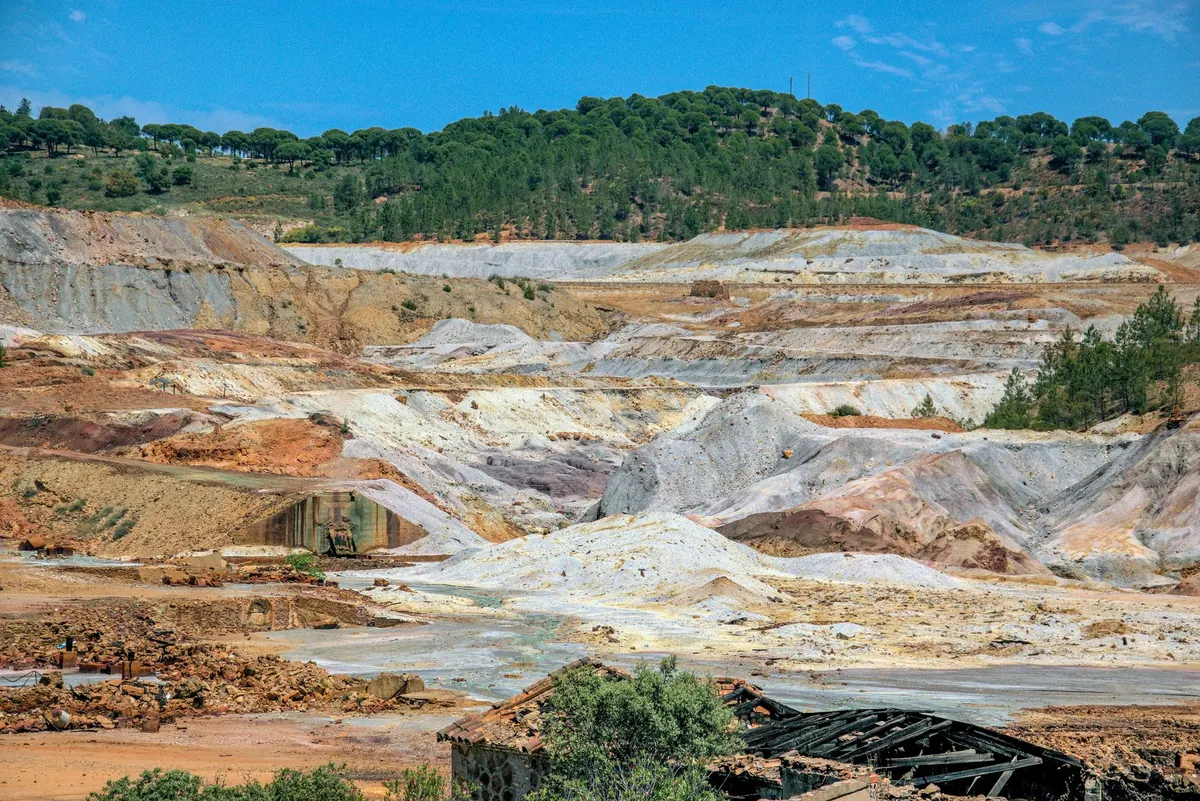
Cornish polymetallic ore is famously dirty. Arsenopyrite and other arsenic-bearing sulphides mean that waste rock, tailings and concentrate all need careful handling. Historic arsenic works left a legacy of contaminated ground across the county, and regulators are understandably reluctant to sign off new volumes of the stuff without robust containment, water treatment and long-term monitoring.
There is nowhere to refine it
The UK has no cobalt refinery. Concentrate would have to travel to Finland, Belgium or further afield for processing, which adds cost, carbon and a strategic irony: a metal mined here to reduce import dependence would still leave the country as a raw material. Building domestic refining capacity is capital-heavy and slow, and it needs a feedstock volume that a single small mine cannot guarantee.
Time
From first drill hole to first concentrate, a British metal mine can reasonably expect a decade or more. Exploration, resource definition, feasibility, permitting, financing and construction each take years, and any one of them can stall the whole sequence. Investors in critical minerals are asked to be patient with a metal whose price is anything but.
How cobalt mining is regulated in the UK
There is no bespoke cobalt regime. A cobalt project is regulated through the same layered system as any other mineral working, and the layers stack up quickly:
- Mineral planning permission from the county or unitary authority, guided by local minerals plans and national planning policy for mineral extraction.
- Environmental Impact Assessment, usually required for a development of this scale, covering landscape, ecology, hydrology, traffic, noise, dust and socio-economics.
- Environmental permits from the Environment Agency in England, Natural Resources Wales, SEPA in Scotland or NIEA in Northern Ireland — covering mining waste, water discharge, groundwater and abstraction.
- Protected site and species consents, where the site touches a SSSI, Special Area of Conservation or Special Protection Area, with assessment under the habitats regulations.
- Financial guarantees for restoration, aftercare and, increasingly, long-term mine waste management, so that the public purse is not left with the bill.
- Mineral ownership checks: gold and silver vest in the Crown, but cobalt belongs to whoever owns the mineral rights, which may be severed from the surface and held by a third party.
Cobalt's place on the critical minerals list has signalled political interest and has helped direct research funding, but it confers no legal fast track. A critical mineral mine still has to satisfy every one of those layers, in order, in public, and with the right to appeal sitting with objectors as well as applicants.
Water, dust and the question of consent
The hardest permission to obtain is not written down anywhere: it is the one granted by the people who live nearby. Cornish rivers already carry a legacy metal load from centuries of mining, and any new discharge consent will be scrutinised accordingly. Dust from haul roads, night-time lighting, heavy traffic on narrow lanes and the visual intrusion of a headframe in a landscape that now sells itself on tourism and coastline — these are the arguments that fill public inquiry halls.
The counter-argument is jobs: a few hundred well-paid, technical, year-round positions in areas that have few of them, plus supply-chain work for local engineering firms. That trade-off, not the geology, is likely to determine which projects proceed.
What to watch
- Drill results, not press releases. Look for width and grade reported together, and for cobalt expressed as a credit within a tin, copper or nickel resource rather than as a headline number.
- Any hint of processing capacity — a partnership, a pilot plant, a memorandum with a European refiner. Without one, the economics stay fragile.
- Tin, tungsten and nickel prices, because those metals will carry the cobalt.
- Local plan allocations and Environment Agency permit applications, which are the first hard public signals that a project is serious.
- Battery chemistry, since every shift away from cobalt in cathodes reduces the strategic premium the metal commands.
Britain's cobalt story is unlikely to end in a boom. It may well end in a handful of by-product streams, a modest increase in domestic supply and a great deal of paperwork. Given where the metal sits on the critical minerals list, that might be exactly the outcome worth having — provided the regulation is done properly and the communities around the sites are treated as parties to the decision rather than obstacles to it.